
Industries / Education
Industry solution
Physical AI for education.
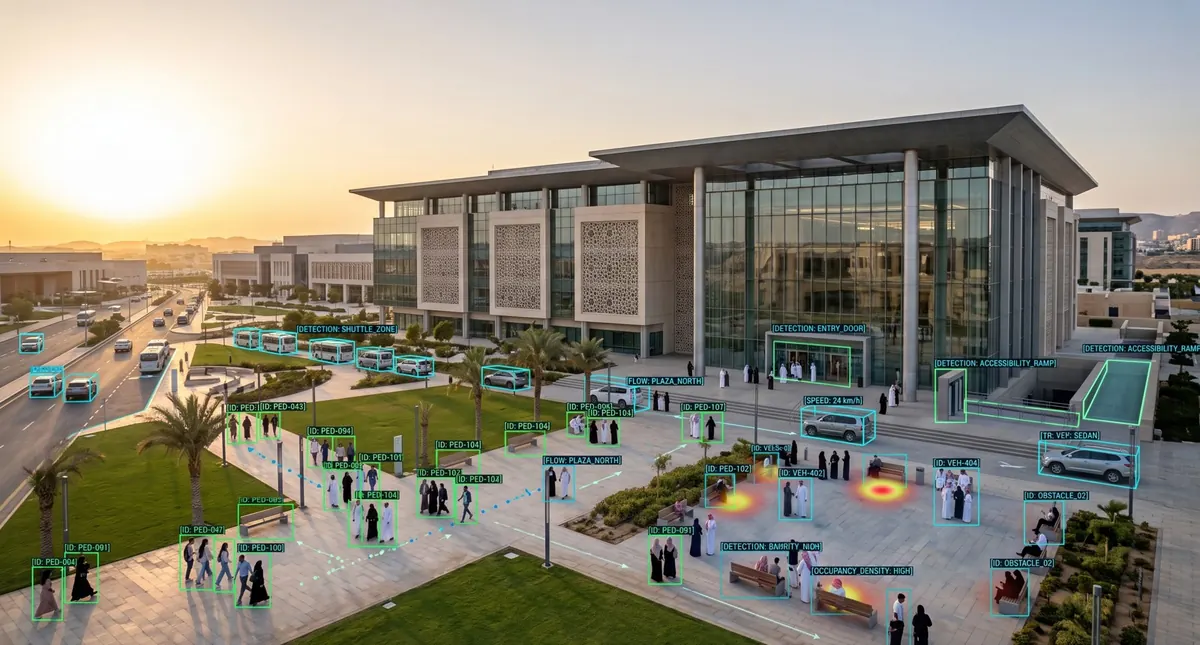
Keep campuses safe and well run. EyeGo watches gates and halls, supports attendance and exam integrity, and keeps labs, kitchens and facilities on standard.
The challenge
What gets in the way today
- Large open campuses, few security staff
- Manual attendance and exam invigilation
- Facility issues reported late
What you get with EyeGo
Outcomes on day one
- Gate, perimeter and after-hours alerts
- Attendance and exam-hall monitoring integrated with SIS / LMS
- Cafeteria hygiene and cold-chain compliance
- Spills, leaks and faults turned into maintenance tasks
On site
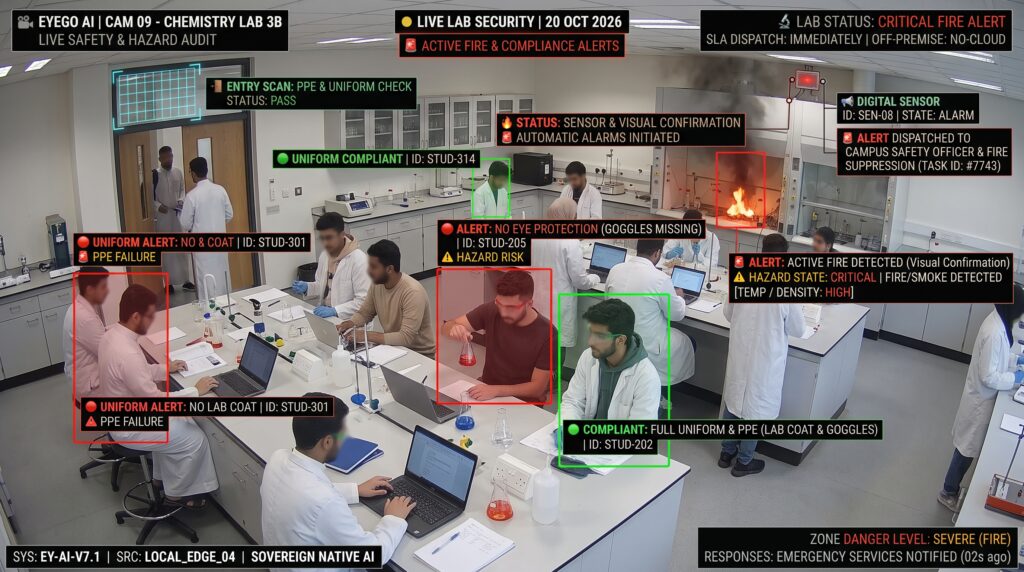
What EyeGo sees in the lab
Use cases
Top use cases in education
Facility management
Convert spills, leaks, unattended zones and equipment faults into tickets automatically, and close them only when the fix is verified.
Crowd management
See density and wait times per zone, predict SLA breaches and move staff before queues form.
Workforce analytics
Keep critical desks and zones covered, spot off-duty gaps and match shifts to real demand, without micromanagement.
Forensic search
Search thousands of hours of video by description, such as “person in a red jacket” or “black SUV”, and follow a path across cameras.
Platform
Products behind this solution
FAQ
Frequently asked questions
How does EyeGo work in education?
Keep campuses safe and well run. EyeGo watches gates and halls, supports attendance and exam integrity, and keeps labs, kitchens and facilities on standard. It connects to existing cameras and sensors, detects events at the edge, and sends each issue to the right person as a task that is closed with proof.
Do we need new cameras or a cloud connection?
No. EyeGo works with existing IP cameras from any brand and can run fully on-premise, including air-gapped deployments.
How do we start?
With a 30-day Proof of Value at one to five sites. EyeGo measures your baseline first, then reports the change on your own data.
See EyeGo on your own sites in 30 days.
Plug-and-play edge devices at one to five sites, no disruption to operations, and a report on risks reduced and hours saved, measured on your data.